Get Started with
Blockdaemon Today!
Contact us to learn how we can help you power your blockchain business.

Unparalleled Security & Compliance
Seamless Integration & Scalability
Dedicated Customer Support

Learn how the Blockdaemon's DeFi MCP Server works with the Zuplo MCP Gateway for AI agents.
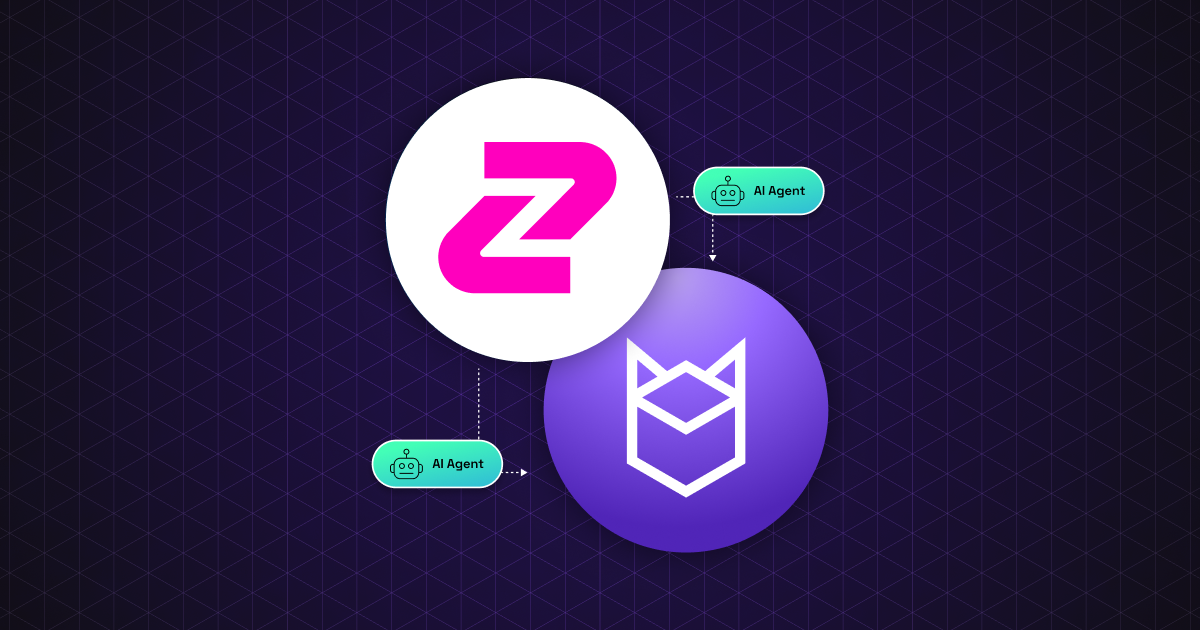
Blockdaemon's DeFi MCP Server is live. It exposes the Blockdaemon DeFi API to AI agents over the Model Context Protocol, and it is delivered through the Zuplo MCP Gateway, the same gateway platform that already supports Blockdaemon's public APIs.
In this blog, we cover how Blockdaemon and Zuplo built this solution, and what developers get from the result.
An AI agent consumes an API differently than a developer does.
A developer reads documentation, holds a credential, and writes deliberate code. An agent discovers tools at runtime, selects them mid-task, and can operate unattended. For institutions, autonomous software cannot touch DeFi liquidity in production without authentication, controlled tool exposure, and a complete audit trail. For developers, the obstacle is simpler. Connecting each AI assistant to each API has meant a separate hand-built integration, and DeFi APIs have been no exception.
Blockdaemon's DeFi MCP Server publishes the DeFi API's operations as MCP tools with typed parameters and validated responses, using search-based tool discovery so that agents look up the tool a task needs instead of selecting from more than 180 at once.
The Zuplo MCP Gateway sits in front of it and enforces the controls: OAuth-based authentication with dynamic client registration, brokered upstream credentials that are stored encrypted and never reach the AI client, capability curation set through configuration, and structured logging of every tool call for audit. The same policy engine applies rate limits and prompt-injection screening to MCP traffic.
"Our customers adopt what they can audit, so agent access had to ship with authentication, curation, and logging enforced at the gateway from the first request." - Varun Gyanchandani, Director of Engineering, Blockdaemon
One endpoint and one key. The server is remote, runs on streamable HTTP, and authenticates with the same API key used across Blockdaemon's products, so registering it in Claude Code, Cursor, VS Code, or Codex is a single command. From there, an agent can quote swaps, compare bridge routes, read lending positions, and track staking rewards across more than 30 networks, with sign-up, key creation, and a first request available self-serve in the Blockdaemon app. Platform teams keep control of what each agent is allowed to do, and every call is attributable after the fact.
The DeFi MCP Server is available today. The DeFi MCP guide covers setup and the current tool list, and Zuplo's MCP Gateway documentation describes what runs on every call in between.


Contact us to learn how we can help you power your blockchain business.